
Almond Blossom Season
Discover Málaga’s almond blossom, with scenic walks, white and pink flowers, and beautiful villages just inland from the Costa del Sol.
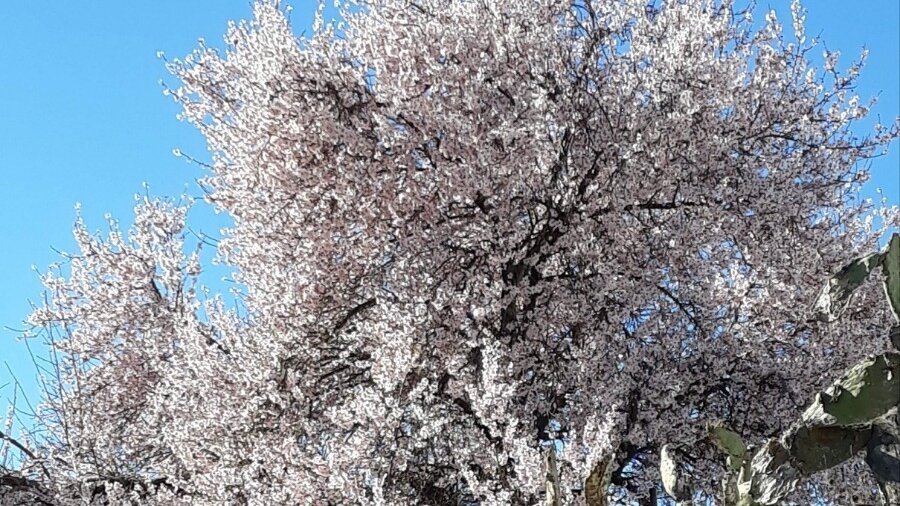
Forget travelling to Japan for cherry blossom. Every winter, Andalucía’s hillsides burst into white and pale pink as almond trees come into bloom. From mid-January to the end of February, discover scenic walking trails, traditional white villages and breathtaking countryside, all within easy reach of the Costa del Sol. Here’s when to visit, where to find the best blossom and how to make the most of your winter escape.
“Seeing the blossom takes a walk or a drive, with no ticket or queue.”
The Almond Blossom Season
Almond blossom season in Málaga province runs from mid-January to the end of February, and the best of it usually falls between the last week of January and the first week of February. White and pale pink flowers open on bare branches across the hills and sierras behind the Costa del Sol while daytime temperatures stay close to 17°C.
Every spring, many travellers fly to Japan for the cherry blossom. Andalucía has its own earlier version, and only around three hours from the UK. The region has more than 150,000 hectares of almond trees, many of them in the Axarquía area of Málaga province. Seeing the blossom takes a walk or a drive, with no ticket or queue.
When is almond blossom season in Málaga province?
The first trees open around mid-January in the mildest spots, such as parts of the Guadalhorce valley and areas near Ardales. The peak runs from late January to the first week of February, particularly in the Axarquía, the Montes de Málaga, Casabermeja and Almogía, and blossom continues in places until the end of February.
A warm spell brings the blossom forward whilst a cold spell holds the blossom back, and heavy rain or strong wind can bring petals down early. There’s no definitive date, so a stay of a week or more across late January and February gives the best chance of seeing the trees at their fullest. The mildest spots flower first, and higher, cooler areas tend to follow.
What does almond blossom look like?
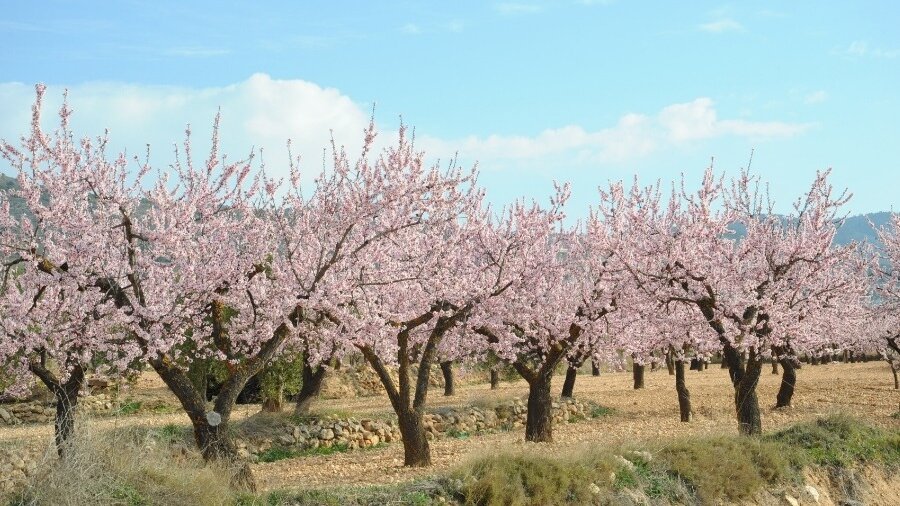
The flowers open before the leaves, so for a few weeks the trees are dark, bare branches covered in white and pale pink blossom. Almond trees grow readily on slopes and rocky ground so you’ll see drifts of the delicate blossom across the hillsides.
The tree was introduced to the region by the Phoenicians more than two thousand years ago, and it remains part of the working landscape; the same trees produce the almonds harvested later in the year.
Where can you see almond blossom near Mijas and the Costa del Sol?
Almond trees grow in almost every municipality in the province, so you won’t have far to travel to see them. The places below have blossom that is easy to find and a path or route to follow. Most are between half an hour and an hour and a half by car from Mijas, depending on the village, and a car makes the day far easier (see our blog on whether to hire a car).
The Sierra de Mijas
The nearest blossom to a Goto holiday rental in Mijas is on the Sierra de Mijas itself. January is a good month to explore the town hall’s waymarked trails, with clear skies and almond trees in blossom on the southern slopes. Most routes start at the Mirador de Mijas Pueblo, are graded by difficulty and have information panels along the way. Paths are steep in places, so wear walking boots and carry water.
Guaro and the Sierra de las Nieves
Guaro stands at over 350 metres on the edge of the Sierra de las Nieves surrounded by olive and almond groves. The village holds an almond blossom day, the Ruta del Almendro. In 2026 it took place on 1 February, with a 10 km circular walk for experienced walkers, a 4 km linear walk for families, almond-based food tastings and a market of local producers. Local cooking includes almond soup (absolutely delicious!).
Dates for 2027 haven’t been published yet, but tend to be either the last Sunday in January or the first Sunday in February.
Cártama and Almogía
In the lower Guadalhorce valley, Cártama has almond trees on the hilltops above its citrus fields. A route leads to the Ermita de las Tres Cruces, where the boundaries of Cártama, Almogía and Álora meet, and it can be done on foot, by bike or by car.
Almogía has more land under almond trees than most towns in the province. Walkers can take the second stage of the Camino Mozárabe or the shorter Lo Bernabé-Charamuza circuit.
Casabermeja and Totalán
North of Málaga city, Casabermeja has a pedestrian path that rises beside the ring road to the El Chorro recreation area, and a waymarked climb to Torre Zambra with views towards Málaga and, on a clear day, the Torcal de Antequera. In the Montes de Málaga, Totalán is ringed by almond trees, with a route to Moclinejo and a short, easy path known as the Paseo de la Salud.
Arenas and Daimalos in the Axarquía
Further east, Arenas has the circular Sendero de las Fuentes y de los Almendros, which starts at the car park by the cemetery and passes the Fuente Pintá spring. You can also walk up to the ruins of the Bentomiz castle with blossom along the way, and the hamlet of Daimalos has an Arabic minaret that is now part of its church.
Almond groves are working farms
Almond groves are working farms, so whilst it seems like open countryside, this is someone’s livelihood. Stay on paths and tracks, keep to the edges of fields, leave gates as you find them and do not pick or break branches, because the flowers become the crop. The farmers have a lot riding on the weather in these weeks, since frost during flowering can put the summer harvest at risk.
For the walk itself, go in the morning when the light is soft and the roads are quiet. Wear layers, because mornings are cool and the sun is warm by midday, and bring boots, water and a charged phone. Paths can be slippery after rain.
What else is there for nature lovers in late winter?
Blossom is the headline but the same weeks suit other outings.
• Sierra de Mijas trails. The town hall’s network covers more than 100 km of paths across the sierra, with routes for different abilities.
• Sierra de las Nieves National Park. Spain’s national tourism site lists winter as a good time for hiking in the park.
• Guadalhorce estuary. This protected wetland beside Málaga Airport is free to enter and open all day, all year, and more than 200 bird species have been recorded there. Winter brings extra duck species to the lagoons, along with flamingos.
Picking the perfect Goto rental for you
Every Goto property has wifi, space to work, a fully equipped kitchen and heating for the cooler evenings, so you can work in the morning if you need to, cook after a day in the hills and plan the next outing around the forecast.
To check availability for late January and February, browse our holiday rentals or contact Goto.
Frequently asked questions
When does almond blossom start in Andalucía?
The first trees open around mid-January in the mildest spots in Málaga province, and the peak runs from late January to the first week of February. The timing varies with the weather each year.
How long does almond blossom last?
Across Málaga province the season runs from mid-January to the end of February, with the best of it in the last week of January and the first week of February. Individual trees flower for a much shorter time, and rain or wind can bring petals down early.
Where is the best place to see almond blossom near Mijas?
Start with the waymarked trails on the Sierra de Mijas, then drive to Cártama, Almogía, Guaro, Casabermeja, Totalán or Arenas, where there are routes through the blossom.
What colour is almond blossom?
White to pale pink. The flowers open before the leaves, against dark bare branches.
Do I need a car to see almond blossom?
A car is the easiest way to reach the villages, and some routes can also be done by bike. The Sierra de Mijas trails start at Mijas Pueblo. See our car hire guide.
Can I pick almond blossom or walk into the groves?
No. The groves are working farms and the flowers become the crop. Stay on paths and tracks and leave the trees as you find them.
Is the weather warm enough for walking in February?
Yes. February averages at Málaga Airport are an average high of 17.7°C and an average low of 8.2°C, with about 180 hours of sunshine across the month. Bring layers and a waterproof for wet days.
Almond blossom season offers a different side to the Costa del Sol, combining mild winter days, beautiful countryside and authentic Andalusian villages. Visit between late January and early February for the best chance of seeing the hillsides in bloom, and allow time to explore the walking trails, local food and quieter corners of the province. Make Goto Property Management your base for a winter escape, with a comfortable holiday rental and the freedom to discover Andalucía at its most beautiful.